


Public Address System for Your Building
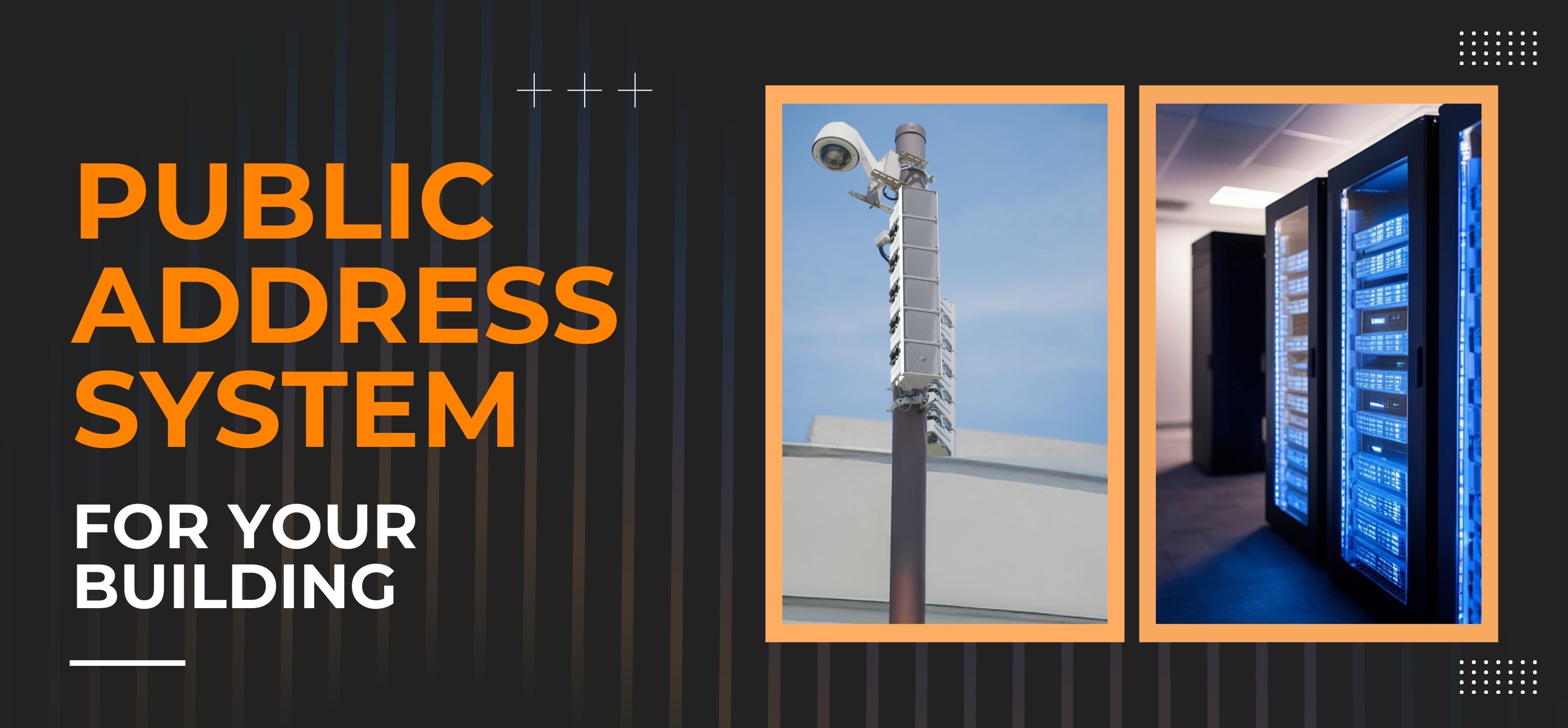
Looking for a reliable PA system? Let’s share about what to buy, type of PA system and trusted brand for schools, offices, churches, malls, hospitals, and commercial buildings. Understand and plan your system confidently and avoid common mistakes.
What Is a PA System and Why It Matters?
A public address (PA) system lets you broadcast clear speech and music across specific areas. PA systems are commonly used for daily announcements, staff paging, emergency alerts, and background audio across schools, offices, churches, malls, hospitals, government buildings, warehouses, and factories.
At a high level, a PA system ensures your message is heard clearly in rooms, buildings, or outdoor spaces. A complete system typically includes:
- Speakers (ceiling, wall-mounted, horn, column/array, long-range)
- Amplifiers (mixer amplifiers, power amplifiers, digital/DSP-enabled)
- Microphones (wired handheld, wireless, lavalier/clip-on, gooseneck)
- Mixer or DSP (for routing, equalization, speech clarity, zoning)
- Cables, controls, paging consoles, rack enclosures, and accessories
Core Components of a PA System
Speakers
- Ceiling speakers: offices, retail shops, clinics, hotel areas
- Wall-mounted speakers: classrooms, corridors, hallways
- Horn speakers: factories, terminals, parking areas, outdoor paging
- Column and compact array speakers: churches, house of worship, mosques, auditoriums, gyms
- Slim/long-range speakers: wide outdoor spaces, high-noise environments
Amplifiers
- Mixer amplifiers: simple paging + background music
- Power amplifiers: larger spaces needing stronger output
- Digital amplifiers with DSP: power efficient and improved clarity
Microphones
- Wired handheld microphones: basic announcements
- Wireless microphones: mobility for events and presentations
- Lavalier (clip-on) microphones: teachers, presenters
- Gooseneck/boundary microphones: meetings and conferences
Mixer or DSP (Digital Signal Processor)
- Controls levels, EQ, noise reduction, routing, and zone management
- Enhances speech intelligibility in complex or noisy spaces
Cables, Controls, and Accessories
- Speaker cables and connectors
- Paging consoles and zone selectors
- Rack enclosures and wall-mounted volume controls
Types of PA Systems Used
Small Portable PA Systems
- Compact, easy to deploy, ideal for small events, community gatherings, school activities, training rooms, and quick outdoor announcements. Usually they include built-in speakers, a compact amplifier, and optional wireless mics.
Commercial PA Systems
- Designed for offices, retail stores, restaurants, clinics, and small businesses. Support background music, simple paging, and a few zones, commonly with ceiling speakers and mixer amplifiers.
School PA Systems
- Mix of indoor and outdoor coverage for classrooms, hallways, gymnasiums, playgrounds, and open areas. Typically includes ceiling speakers, wall speakers, horn speakers, and multi-zone amplifiers for campus-wide announcements.
Church & Worship PA Systems
- Focus on clear sermons, choirs, and worship music. Column and compact array speakers help maintain speech intelligibility in reverberant spaces.
Network/IP-Based PA Systems
- Preferred for modern multi-building facilities. Offer centralized control, paging over LAN, scheduled/automated announcements, and integration with CCTV and fire alarm systems. Scalable for malls, campuses, hotels, government buildings, hospitals, and large offices.
Outdoor & Long-Range PA Systems
- Built for stadiums, resorts, parking areas, transport hubs, industrial zones, and factories. Use horn speakers, long-range slim arrays, and high-output amplifiers for clear sound over long distances.
Factors to consider when choosing the Right PA System for Your Space
- Size & layout: Larger open areas, high ceilings, long corridors, and outdoor spaces need different speaker types and stronger amplifiers.
- Zones: Identify areas needing separate control (e.g., classrooms vs hallways; lobby vs departments; dining vs kitchen). Choose systems with zoning control.
- Noise level: Factories, terminals, gyms, and outdoors may need horn or long-range speakers and higher-output amplifiers. Quiet areas use ceiling/wall speakers.
- Purpose: Clarify your primary use, such as speech announcements, background music, emergency paging, scheduled playback, or live events, to match microphones, speakers, and DSP.
- Future expansion: Select modular or IP-based systems that can grow without replacing the entire setup.
- Compatibility: Ensure smooth integration with existing CCTV, fire alarms, access control, and IP networks.
Contact us if you need help choosing the right components or systems for guidance. We work with authorized distributors and installation partners to help you get the best setup for your building.
Access Our Catalogues here.
For further inquiries or assistance, contact us at TOA Electronics Pte Ltd.
